
New Orleans
Last Update
/
5
Min
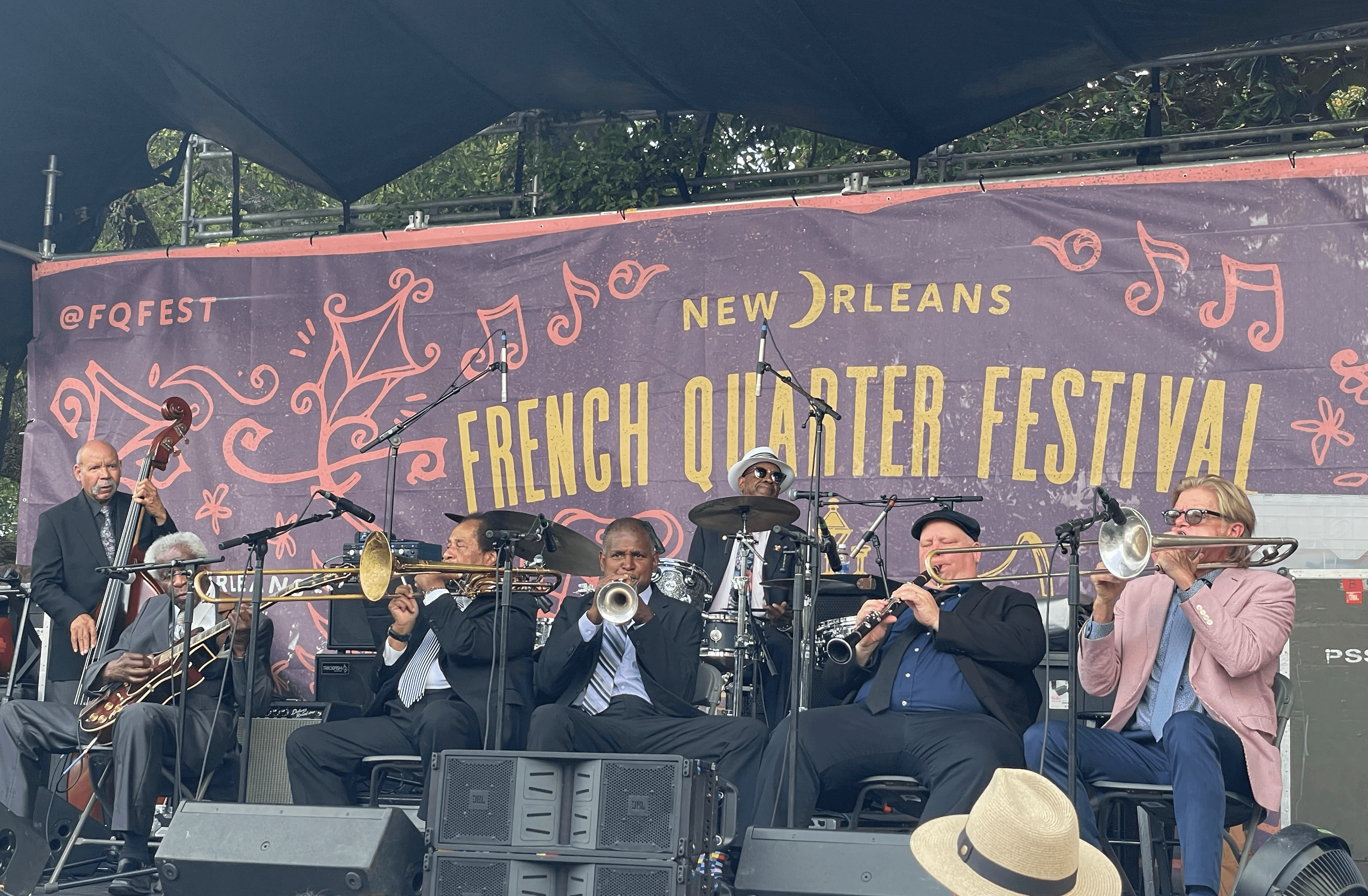
New Orleans is the birthplace of jazz, and authentic jazz can be heard everywhere here. On street corners, in parks, bars, music lounges, hotel lobbies, and even airports, notes from saxophones dance and leap through the air. African drumbeats, Caribbean rhythms, French languor, Spanish passion — all these elements blend together, merging and permeating one another. You arrive, become thoroughly soaked in it all, and even after you leave, the music lingers in your ears long after — so you turn around and come back. Attending the French Quarter Festival in New Orleans has become an annual ritual for us. During the festival, the city streets and the banks of the Mississippi River come alive with more than a dozen stages of all sizes, running performances from eleven in the morning to seven or eight at night — a true feast of jazz.
Friday was the second day of the French Quarter Festival. We came to Jackson Square to listen to the Lawrence Cotton Legendary Experience. Despite the sweltering heat, the band was dressed in suits and ties. A ninety-nine-year-old Black pianist hunched forward, his fingers leaping across the black and white keys; a silver-haired guitarist could no longer stand on his own and had to be supported by others. Their music had walked out of another era, carrying the imprint of history. After the Civil War abolished slavery, America took a full hundred years to abolish racial segregation — a wound in American history that has never fully healed. Jazz developed and evolved across those
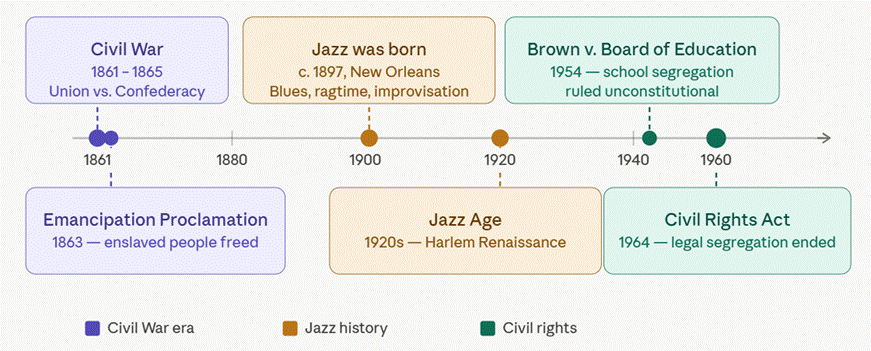
hundred years. Tonight, in the music bars of New Orleans, the music that once walked out of the red-light district plays on. From under the heaviest oppression came the most deeply moving music. After a full day of grueling work in the cotton fields, scorched by the Southern sun, a worker would sit by the murky Mississippi at dusk and let a jazz melody release the day's weight and ease the exhaustion. In jazz there is helpless pain and suppression, confessional conversation, passionate outburst — the bass's low murmur, the drumkit's storm of beats, the crisp leaping of piano keys, and the soul of jazz: the saxophone, at times lamenting softly, at times wailing at full pitch, every emotion stretched to its limit. I found myself wondering: when this generation passes, will jazz lose some of its suffering? Last year I heard a jazz concert in Vienna and was utterly stunned. A Black female musician imitated birdsong and wind in a forest, then a band of more than ten launched into a funky climax that brought the audience to thunderous applause. My companion and I looked at each other, not quite understanding, and quietly left the theater.
When it comes to New Orleans music bars, Fritzel's cannot go unmentioned. It is a European-style jazz bar, and its cramped space is always packed to capacity. Most of the people who come here are devoted jazz enthusiasts. Among the audience you often meet travelers from around the world, especially Europe. Tonight my neighbor was a British professor who teaches at IESE, one of Spain's top business schools. Behind us sat two Dutch visitors. Tonight's performance featured a five-piece band — the youngest member was in his twenties, while the older ones were well into their sixties and seventies. A rendition of "St. Louis Blues" brought the set to its peak. My friends from St. Louis waved their arms with excitement.
In the evening, our friend had reserved dinner at Revolution Restaurant. New Orleans music soothes the soul; its cuisine nourishes the palate. The food here is rich — not particularly healthy, but fragrant and filling, and deeply satisfying. Cajun and Creole are the two dominant styles: Cajun is more rustic, rooted in rural French culture, while Creole is more urban, reflecting New Orleans' multicultural city heritage. The local cuisine draws on what the land provides — fish and shrimp from the swamps and rivers are regular guests at the table, prepared with French and African culinary techniques. Yes, French and African — food is wonderfully indifferent to distinctions of "advanced" or "backward"; the only question is whether it tastes good. Gumbo is a thick, savory porridge of rice, sausage, and vegetables cooked together. Crawfish is a star ingredient in New Orleans cooking. The most direct and exuberant preparation is spicy crawfish — boiled with corn, potatoes, and sausage, deeply satisfying to eat. Bayou Beer Garden is a local favorite: several rooms and a courtyard connected together, food, drinks, and entertainment all in one. A big box of spicy crawfish costs only nineteen dollars — affordable and excellent. Their catfish tacos and crab dip are also delicious and great value. Cajun Seafood was another restaurant recommended by an Uber driver, but we didn't have time to visit.
Friday had been so much fun that the boys slept in until noon. I went out alone in the morning and wandered into a Café Beignet, ordering a cappuccino and a serving of beignets. Beignets are a New Orleans pastry — essentially fried dough, either solid or hollow. These were delicious: soft and pillowy, fresh from the fryer, still hot, dusted with a layer of powdered sugar — sweet and oily, a perfect match for bitter coffee. I strolled and snacked my way through a few art galleries. New Orleans means something different to each viewer: to some it's lush green courtyards and colorful streets, bright and joyful; to others, dim and mysterious, secretive, flickering lights concealing secrets — two completely different visions. During the French Quarter Festival, makeshift stages appeared on every street corner. Before I even reached Jackson Square, I was stopped by a four-piece group and stood to watch their performance.
Once the late risers finally emerged, we strolled along the riverbank. A large stage had been set up on the shore, and the grass was covered with people sitting and lying about. A cool breeze blew off the river, dispersing the heat. And this was only April — what would the height of summer be like? Our friend, feeling lazy, hired a pedicab to take us to Frenchmen Street. This is a district dense with music bars — come nighttime it buzzes with life, and bar after bar on both sides of the street hosts back-to-back performances. Street musicians set up their stands, and instruments you'd normally see in a concert hall — bass guitars, drum kits — are propped up on the grimy sidewalk and the music begins. This kind of scene probably only exists in New Orleans. Spotted Cat is a well-known music club we visit every time we come to the city. It regularly hosts musicians from around the world — tonight's five-piece band included a player from Venezuela. Snug Harbor is a small two-story venue that requires advance tickets. Tonight's performer was Chuck Redd, a celebrated vibraphonist. The special guest was Jason Marsalis — the youngest son of the legendary Marsalis family. The Marsalises are a New Orleans musical dynasty who have, in large measure, defined contemporary New Orleans jazz. The father is a musician, an educator, and the Jazz Director at Lincoln Center. All four children are top-tier jazz talents. When a Marsalis takes a supporting role on stage, you can imagine the caliber of the headliner. Amusingly, midway through the performance the two musicians swapped instruments — both are multi-instrumentalists. It was a feast for the ears.
Cafe Negril is known for hosting Latin bands. Tonight's act was Bon Bon Vivant — upbeat rhythms, joyful drumbeats, and an electrifying singer who ignited the audience's enthusiasm and drove the bar's atmosphere to a high point. "Bon vivant" in French means a person who appreciates the good life: fine food, elegant dress, a love for refined and beautiful things.
Leaving Café Negril, the night was still young. We took a cab back to the hotel, where tonight's performance featured James Davenport from St. Louis — yet another fellow townsfolk connection. On a Saturday night, the hotel lounge was packed. Our friend found a server and slipped them a hundred-dollar bill; the server quickly found us a table right next to the stage. Money talks. The jazz here was the polished, refined white version — lingering longing and the push-and-pull of love, soft and velvety. Compared to Lawrence Cotton's music, it lacked the tragic grandeur and the deeper layers of suffering. Well-dressed patrons swayed and danced lightly to the gentle rhythms. The worlds can be so different.
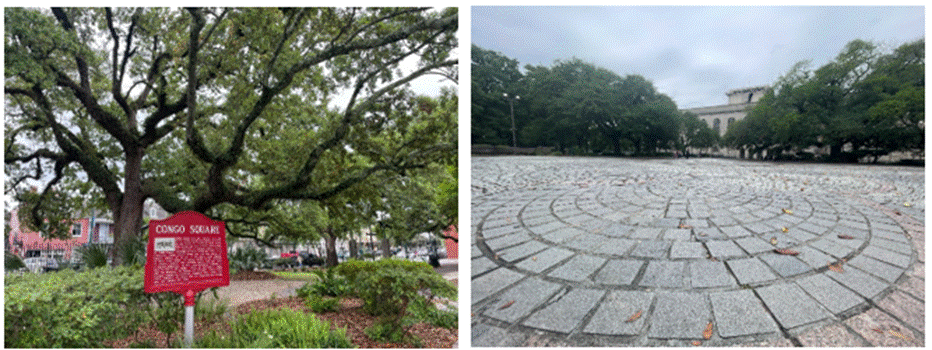
On the morning we left New Orleans, I deliberately walked out of the lively French Quarter to see another side of the city. Sunday morning, the streets were quiet. It had rained the night before, washing away the street-level grime; the air felt slightly cool. I walked until I arrived at a park — Armstrong Park. Stepping inside, beneath a ring of leafy ancient trees, lay a circular plaza: Congo Square. This was once a sacred site where Native Americans gathered each year to celebrate the corn harvest. During the eighteenth-century French and Spanish colonial era, it was a slave market. In the early nineteenth century, it became the place where enslaved people gathered on Sunday afternoons to drum, sing, dance, and trade. The rhythms brought from Africa gave birth to jazz and the blues. In the quiet morning, the plaza was still — only a group of tourists listening to a guide's narration, and in one corner, under a big tree, a circle of young people doing yoga. In the stillness, I seemed to hear the echo of African drumbeats, and could almost see the enslaved people who once danced wildly on this ground.
Leaving New Orleans, the beats of jazz still echoed in my ears. It's such a happy place! The music, the food, the warmth and friendliness of the Southern people — it's hard not to be captivated by this city. In the wake of last New Year's terrorist attack, New Orleans is heavily secured: Bourbon Street is lined with concrete barriers and police cars; on the Mississippi, National Guard soldiers stand at the bows of patrol boats, rifles in hand. But New Orleans is still New Orleans. Deep in their bones, the people here live and enjoy life with joy.
4/22/2026, written in Colorado


